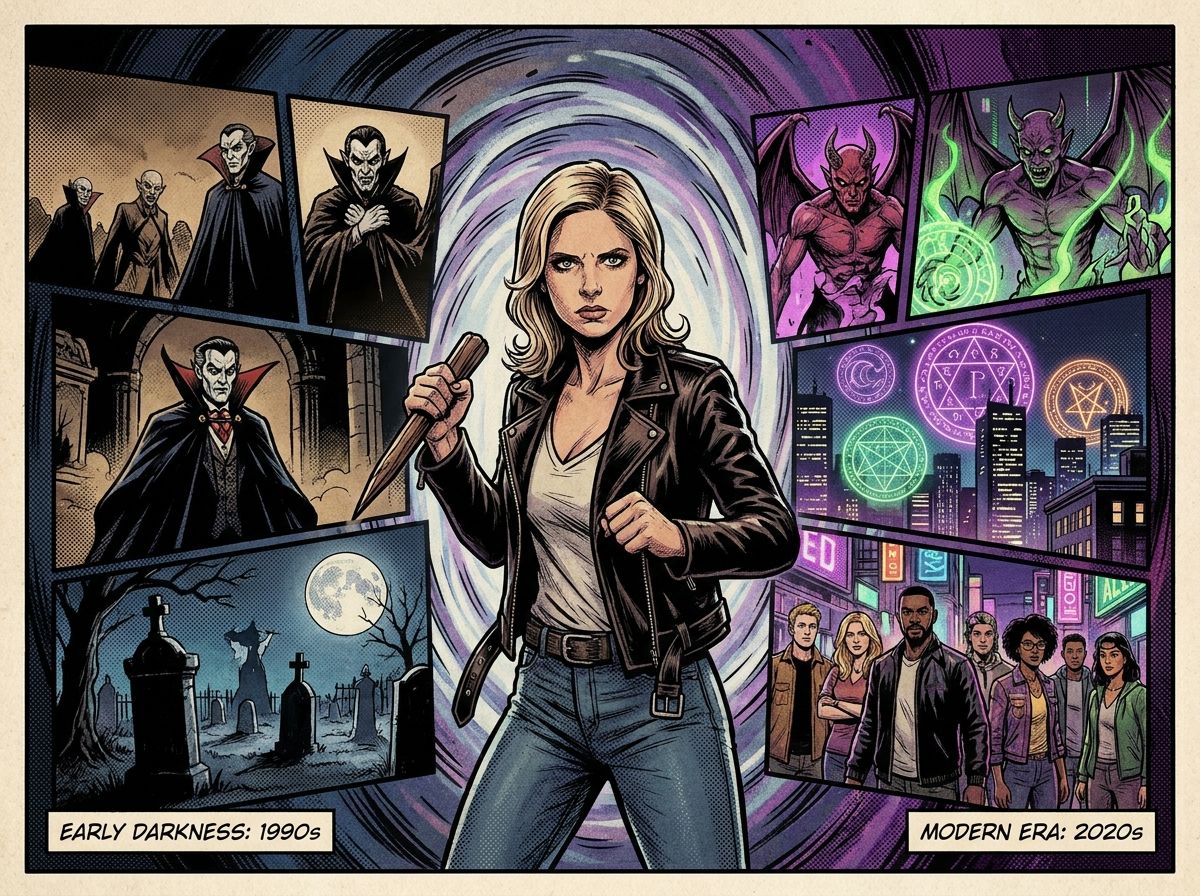
So you finished the show. All seven seasons. And now there is this weird emptiness because Sunnydale is gone and you have no idea what happened to everyone. Good news is the story did not stop there. Reading Buffy the Vampire Slayer comics in order is genuinely the best decision you can make as a fan because the comics go places the show never could, partly because there was no budget limit and partly because nobody had to worry about network television rules anymore.
There are two completely separate comic universes to know about. One is the Dark Horse continuation that picks up directly after Season 7. The other is a modern reboot from BOOM! Studios that started in 2019. They have nothing to do with each other story-wise, so knowing which path you want to follow before you start saves a lot of confusion.
Start Here If You Want the Classic Stories First
Dark Horse was publishing Buffy comics while the show was still on the air. Most of these are not considered canon but they are genuinely fun reads. The Classic series ran over 60 issues and covers all kinds of stories set during the show’s timeline.
Two things from this era actually matter for the bigger story later on. The first is Tales of the Slayers, which is an anthology exploring different Slayers throughout history. The second is Fray, a standalone story set in the far future about a new Slayer named Melaka Fray. Read Fray especially. It connects directly to Season 8 and if you skip it you will hit a plot point later and feel completely lost.
Buffy: The Origin is also worth picking up early. It retells the original 1992 movie story but fixes a lot of things and actually matches the character Joss Whedon meant to create.
Season 8 Is Where the Real Continuation Starts
This launched in 2007 and it immediately feels bigger than anything the show did visually. Buffy is now running a global Slayer operation. There are hundreds of activated Slayers worldwide. A mysterious villain called Twilight starts causing serious problems. It is dramatic, sometimes a little wild, and honestly it takes a few issues to settle into the new format after years of watching the story on screen.
Season 8 ran until 2011 and is collected across five trade paperbacks. The hardcover Library Edition version organizes all the tie-ins and one-shots into the right sequence which makes it the smarter way to read it if you want nothing out of order.
Seasons 9 and 10 Bring in Multiple Series Running at Once
This is where the reading order gets a little more involved. Season 9 runs from 2011 to 2013 and the tone shifts noticeably. It is more personal and smaller in scale compared to what Season 8 was doing. Running alongside it is Angel and Faith Season Nine, which follows those two in London dealing with serious fallout from the previous season. There is also a Willow miniseries called Willow: Wonderland that fits into this same period.
The honest answer to how to read all of these together is to follow the publication dates. Reading issue by issue across all three series in the order they came out gives you the experience closest to how fans followed it in real time.
Season 10 is where a lot of readers agree the comics hit their stride. It runs from 2014 to 2016 and the writing feels more confident. Angel and Faith Season Ten is happening simultaneously and the two series actually cross over in meaningful ways during this stretch.
Season 11, Season 12, and the End of the Dark Horse Story
Season 11 goes somewhere unexpected and brings in themes that feel very much tied to the real world climate when it was published between 2016 and 2018. Angel Season Eleven and a short Giles miniseries called Girl Blue both run during this same window.
Season 12 is the finale of everything Dark Horse built across more than a decade of comics. It is only four issues, which surprised a lot of people, but it works as a proper ending. Joss Whedon wrote it himself and there is a clear sense that he wanted to close things on his own terms.
The BOOM! Studios Reboot Is a Completely Different Thing
Started fresh in 2019 and it is its own world. Same character names, same general mythology, but Buffy is a teenager right now in the modern day and the histories are different. The relationships between characters are reimagined. There is no connection to the Dark Horse timeline at all.
The main BOOM! series ran four volumes. After that came the Hellmouth crossover event, a Willow solo series, an ongoing series called The Vampire Slayer from 2022, and a story called Buffy the Last Vampire Slayer that imagines an alternate future.
If you have never watched the show and just want to jump into comics, the BOOM! reboot is genuinely accessible. If you watched every episode and want to know what happened next to those exact characters, start with Dark Horse Season 8 and work forward from there.
The Two Paths Do Not Mix
This is probably the most important thing to understand about Buffy the Vampire Slayer comics in order. A lot of new readers pick up a BOOM! issue expecting it to follow from the Dark Horse seasons and then feel confused when nothing lines up. They are separate universes built for different purposes. Both are good. They just tell different stories with the same characters. Knowing that before you start makes the whole experience a lot smoother.