

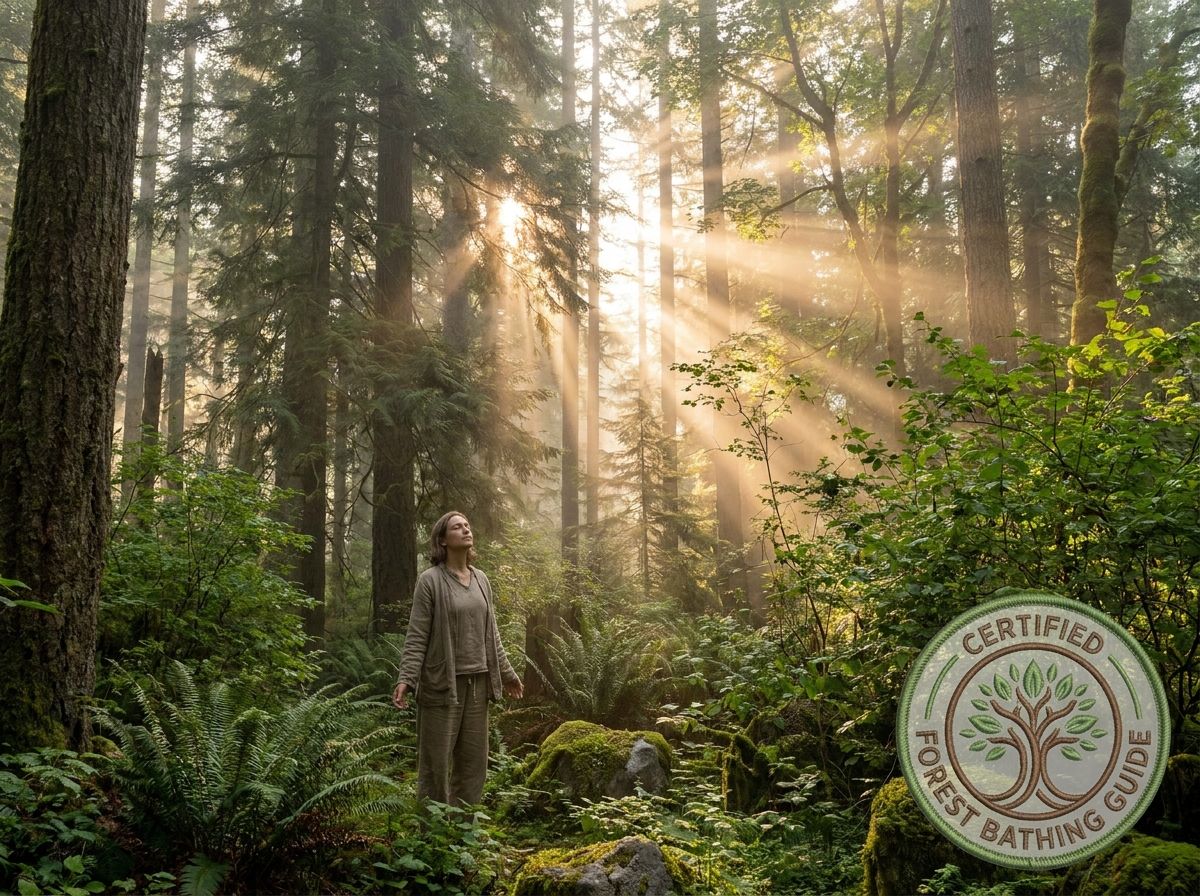
So you’ve heard about forest bathing and now you’re wondering if there’s an actual certification for it. Yes, there is. Forest bathing certification, rooted in the Japanese practice of shinrin-yoku, trains you to guide other people through intentional, mindful experiences in nature. It’s not just about walking in the woods. It’s a structured professional credential that teaches facilitation, safety, nature-based healing principles, and how to hold meaningful space for groups outdoors.
What This Certification Actually Means
A lot of people assume forest bathing is something you just… do. And in its basic form, it is. But when it comes to guiding others professionally, there’s a whole layer of knowledge and skill involved that casual nature walks don’t cover.
Certified forest bathing guides learn how to work with different kinds of people in outdoor settings, understand the science behind why nature affects our bodies and minds, and facilitate sensory experiences that go far beyond a typical hike. The training pulls from ecotherapy, mindfulness, somatic awareness, and even a bit of environmental science. It’s genuinely multi-disciplinary.
There’s no single global body that controls all forest bathing certifications. Different organizations have built their own programs, each with its own philosophy and structure. But the reputable ones share a common thread: they take the practice seriously and build in real-world experience before they hand you a credential.
Organizations That Offer Forest Bathing Certification
Association of Nature and Forest Therapy (ANFT) is probably the most internationally recognized name in this space. Their program runs for six months online, then wraps up with a four-day in-person immersion in a natural setting. You also have to complete a Wilderness First Aid or Wilderness First Responder course before you get the full certification. ANFT has trained guides across dozens of countries, and their curriculum carries real weight in the forest therapy community.
Forest Therapy Hub (FTHub) leans heavily into evidence-based methods. They offer both fully online and blended formats, the blended ones including a three-day in-person component. There’s also an advanced Forest Therapy Practitioner track if you want to go deeper than the guide level. Before certifying, students need current First Aid and Mental Health First Aid credentials, which honestly makes a lot of sense given the populations this work can attract.
The Forest Therapy School takes a more mindfulness-centered approach. You can choose between a 16-week online cohort or a 7-week online retreat format, and both include a mentored practicum after the online portion wraps up. The school holds accreditation through the International Mindfulness and Meditation Alliance, which gives the credential a bit of added formal recognition.
The Forest Bathing Institute is UK-based and built around something they call the Forest Bathing+ system, which is grounded in peer-reviewed scientific research. Their program runs across two modules and usually takes somewhere between eight and twelve months to finish. It combines online theory with practical in-person sessions, and the science-first approach makes it a strong choice for people coming from healthcare or research backgrounds.
What the Training Process Looks Like
Most programs, regardless of which organization you go through, follow a pretty similar structure. It starts with months of core coursework online. Topics covered usually include the history and cultural roots of shinrin-yoku, the science of nature connection, mindfulness facilitation basics, and how to safely lead groups in outdoor environments.
Then comes the in-person immersion. This part typically runs three to five days and takes place in an actual forest or natural setting. You practice everything you’ve been learning in a real environment, often alongside other trainees and experienced mentors who give you direct feedback. It’s the part of the training where things start to click.
After the immersion, there’s a mentored practicum. This is where you go out and lead real walks with actual participants while receiving structured supervision. Depending on the program, this phase lasts anywhere from six weeks to several months. It’s not just a formality. Most programs treat it as one of the more important parts of the whole process.
First Aid certification is required across virtually all serious programs. Some ask for standard First Aid, others specifically require Wilderness First Aid since guides often work in remote areas where emergency response can be slow.
The Science That Backs It Up
One reason forest bathing has earned credibility as a professional practice rather than just a wellness trend is the research. Studies coming out of Japan and South Korea in particular have documented measurable health outcomes from time spent in forested environments. Lower cortisol levels, reduced blood pressure, improved mood, and stronger immune markers have all shown up in the data.
Researchers have pointed to phytoncides, the natural compounds trees release into the air, as one biological mechanism behind these effects. When you breathe them in, your body responds in ways that support immune function and lower stress hormones. That’s not poetic language. That’s measurable physiology.
Certification programs include this science for a reason. A trained guide isn’t just walking people through pretty scenery. They’re designing experiences meant to produce specific outcomes, and knowing the research helps them do that more thoughtfully and more effectively.
Who Gets Certified
The range of people pursuing forest bathing certification is genuinely wide. Therapists, nurses, yoga instructors, school teachers, park rangers, wellness coaches, even corporate wellbeing professionals have all come through these programs. Some add it to an existing practice. Others build something new around it entirely.
It’s not exclusive to wellness professionals either. People working in public health, urban design, and environmental education have found real value in understanding this practice, especially as conversations around green space access and mental health become more mainstream.
Where the Field Is Headed
Forest therapy as a professional field is still finding its shape, at least in the Western world. Organizations are slowly working toward more consistent standards around curriculum and safety requirements. Online learning has opened these programs to people in regions where in-person trainers simply aren’t available yet.
As interest in nature-based mental health practices keeps growing, the infrastructure around certification is becoming more structured. More specialized tracks are appearing too, with some programs developing training specifically for working with children, veterans, or people managing chronic illness. The field isn’t finished building itself, but it’s building steadily.

