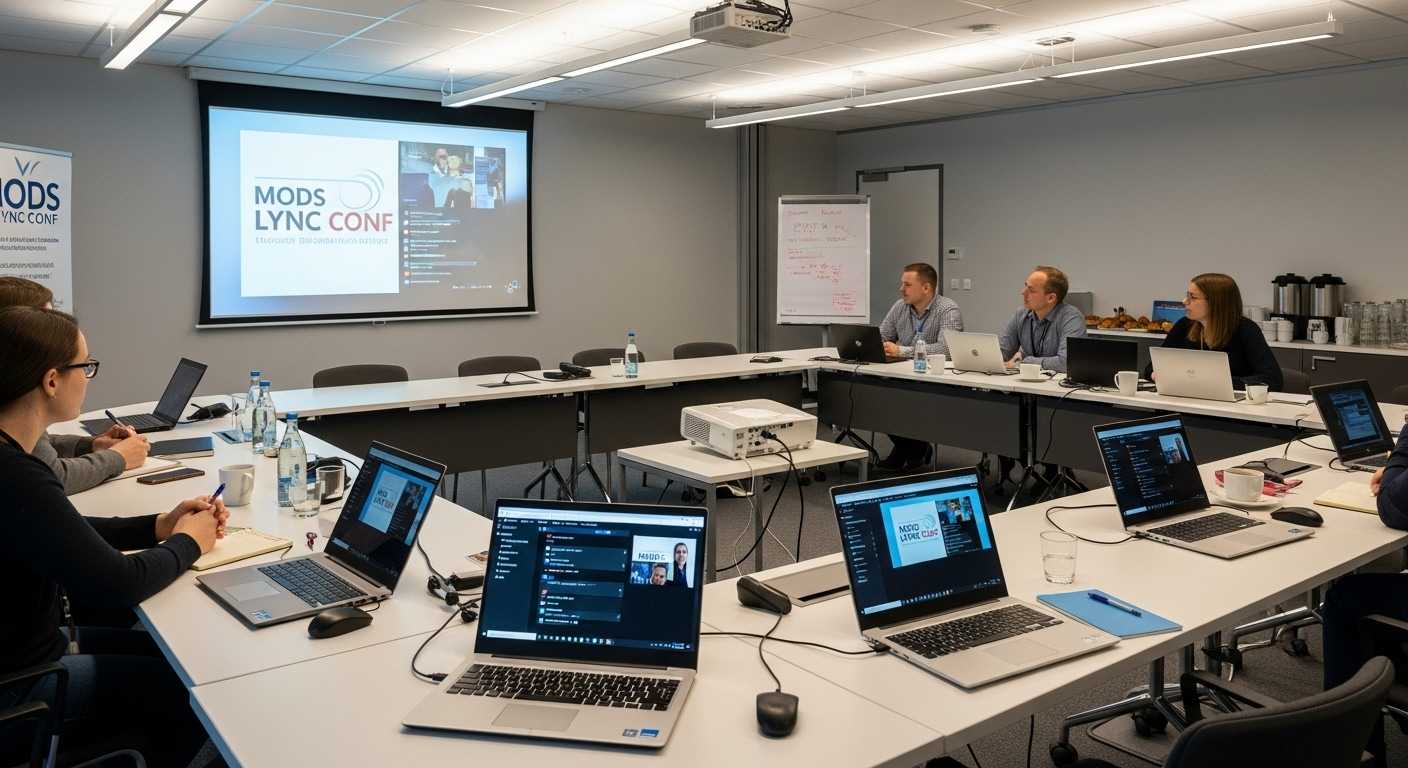
Remote work and video calls are here to stay – but their endless walls of talking heads can get dull. That’s why mods lync conf have suddenly taken off. These are add-ons or apps for Microsoft’s Lync/Teams platform that sprinkle games and interactive activities into your conference meetings. In short, they turn a normal video call into a fun, game-like session. Teams that try this often see a big engagement boost: one Microsoft report even found teams who played short video games together were about 20% more productive than those with only traditional meetings.
Lync Conf Game Mods might sound like geek-speak, but the idea is simple. Think of them as little “meeting games” hidden inside your video chat app. For example, Microsoft’s new Games for Work Teams app lets you launch Minesweeper, Wordament or quick trivia right in a meeting. Suddenly, instead of staring quietly at screens, everyone has something playful to do. These light contests and challenges give a nice break from the usual agenda, keeping people alert and excited to participate.
What Are Lync Conf Game Mods?
Lync Conf Game Mods – “conf” short for conference – are essentially plugins or apps you add to your virtual meeting software. Originally built for Microsoft Lync (now Skype for Business/Teams), they embed mini-games or interactive features into the meeting window. In practice, they can be anything from simple quiz polls and badges to full mini-games like scavenger hunts or puzzles. The goal is to reward participation: for instance, a moderator might launch a quick quiz, award points for correct answers, or give everyone virtual badges for contributing ideas. In effect, these mods gamify the meeting process. As one blog puts it, they transform virtual meetings into “interactive, game-like experiences – rewarding participation, creativity, and teamwork”.
Why Gamification in Meetings Works
Why would you turn work meetings into playtime? Because games tap into basic human psychology. When people earn points or badges, their brains release dopamine – the “feel-good” chemical of achievement. This makes even mundane topics more engaging. Studies back this up: one HR report noted that gamified training programs saw a 60% jump in engagement and 40% better information retention. In other words, teams remember more and participate more when fun elements are mixed in. Microsoft even cites a Brigham Young University study showing that teams playing short video games together were significantly more productive than traditional team-building groups.
Below are some big reasons organizations are adding these game mods:
Fight “Zoom Fatigue.” Long video calls can be exhausting. Stanford researchers found that constant close-up eye contact on screens is stressful and tiring. Tossing in a quick game gives everyone a mental break. For example, scheduling 5–10 minutes of trivia or a group puzzle in the middle of a call can reset attention and reduce burnout.
Build Team Camaraderie. Friendly competition and shared fun help people bond. When teammates solve a puzzle or win a game together, it sparks laughter and informal chat that mimics office banter. Microsoft’s team-building games are explicitly meant to “promote creativity, collaboration and communication in powerful and unique ways”. Even remote, it feels like play.
Increase Learning & Retention. Turning training points into a quiz or game makes learning stick. The interactive nature of a game means details discussed in the meeting are recalled later. SHRM reported those same 60% engagement gains in training programs – clearly showing that people remember gamified meeting content better.
Encourage Participation. Games level the playing field. Introverts or camera-shy folks might stay quiet in a normal call, but a quiz or poll can gently coax them out. With points or leaderboards, even shy team members get a chance to contribute (and feel seen) without putting a mic on.
Customize to Your Team. You’re not stuck with one game for all. Most mods let you tailor questions, point systems, or game style to fit your culture. For example, some Teams apps offer themes (like office trivia or “this-or-that” icebreakers) that match your group’s interests. This flexibility means you can pick a quick word puzzle, a “two truths and a lie” session, or a friendly quiz – whatever makes your team engaged.
In short: injecting a bit of play into meetings can have a real impact on mood and morale. It’s a modern answer to an age-old problem: meetings that drag on. When used well, gamification in calls makes people lean in and listen rather than zone out.
Types of Lync Conf Game Mods (Examples)
Not all game mods are the same. Here are common categories you might see:
Icebreaker Games: Fun questions or rapid-fire quizzes at the start of a meeting. For example, a “this-or-that” icebreaker (pineapple or pepperoni on pizza?) warms everyone up before business discussion starts. Microsoft’s IceBreakers game is one such example.
Trivia and Quiz Apps: Live quiz games where participants answer pop-up questions. (Popular tools include Kahoot! and Teams’ built-in Trivia app.) These are great for training topics or just lighthearted team catch-ups. UC Today notes Teams apps like Trivia and NickNack offer custom quizzes, leaderboards and rewards to keep things lively.
Puzzle & Escape Room Challenges: Virtual puzzles (like crosswords or Sudoku) or mini escape-room scenarios. Teams can work in breakout rooms to solve clues. For instance, Microsoft added Minesweeper into its Teams games suite – colleagues must collaborate to clear the field, which is both a brain teaser and team exercise.
Real-Time Polls & Voting Games: Quick polls or emoji reactions that turn into a game. Tools like Polly or Zoom polls can be used to play “vote on a funny question” or do a virtual “roast us” game. Every vote can earn a point or just spark discussion.
Leaderboards & Recognition: Some mods simply track participation or contributions. For example, you might give points for every question asked or idea contributed. A running scoreboard shows top “contributors” of the meeting, gamifying even routine tasks like speaking up.
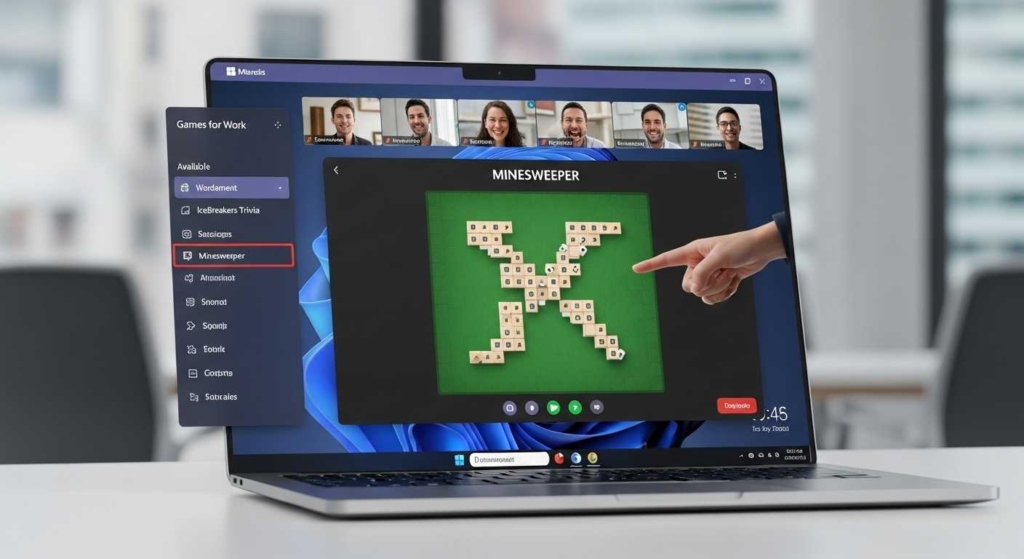
Each of these “mods” can be activated by a meeting host or automatically run at set times. Many come as Teams apps (find them in the Teams Apps store) or Zoom Apps in the Zoom marketplace. For example, adding the Trivia app in Teams is as simple as searching for it and adding it to the channel – then you can launch a quiz in any chat or meeting. Likewise, Zoom has extensions (like Twine) that let a host launch breakout-game apps right in the call.
If you scroll through an app gallery (Microsoft or Zoom), you’ll also find other bonding tools: Polly for quick polls, Whiteboard Jams for group doodling, or even fitness/wellness challenges. But the idea is the same: mix a mini-game or interactive exercise into your online meeting flow.
How to Start Using Game Mods in Your Meetings
Getting started is easier than you might think. Here’s a simple approach:
Choose a Platform: First, pick the meeting tool your team uses (e.g. Microsoft Teams or Zoom). Each has its own add-on store. Teams has “Apps” where you can search for game-related tools (Trivia, Polly, NickNack, etc.). Zoom has “Apps” like Twine, MURAL, or Slido for interactive games.
Install an App or Extension: In Teams, go to Apps or your channel settings and add the game app of your choice. For Zoom, click Apps or Marketplace and find the game (e.g. “Trivia” or “Team Building”). Install it according to your company’s IT rules.
Plan Your Game: Decide when to run it. Good moments are at the meeting start (warm everyone up) or at a break point. Prepare any needed content: quiz questions, poll options, or a short puzzle. For example, if using Trivia, upload your custom questions beforehand.
Set Expectations: Tell participants in advance that the meeting will have a quick game. This helps people come in ready (and on camera if needed). Clarify if it’s just for fun or if there’s a prize – but usually it’s just to energize the group.
Launch the Game: Share your screen or use the app’s built-in launch button during the meeting. If it’s an interactive quiz, participants will see questions on their own screen or hear them read out. Encourage everyone to join in via the app or chat. A moderator might read questions aloud if people have audio off.
Debrief and Collect Feedback: After the game, spend a minute to highlight funny answers or lessons learned. Then continue with the meeting. Afterwards, ask the team what they thought – games are new for many, so feedback helps you tweak length and difficulty next time.
Each platform’s process differs slightly. For example, Microsoft’s blog notes that the new Teams “Games for Work” app integrates directly into the Teams interface – once you add the app, you can launch games in any meeting on desktop or mobile. For Zoom, you might use a separate app like Twine: one blog shows it shuffling people into mini-breakout talks or games for a few minutes. But in general, the pattern is: install → prepare content → run during call.
Tip: Keep it short and sweet. A 5–10 minute game is often enough to refocus everyone. Don’t let the game overrun the meeting agenda. Also, make it optional in tone – if someone doesn’t want to play, they can spectate without pressure. The goal is fun, not forced competition.
Benefits of Gamified Meetings
When used well, mods lync conf can yield real results for your team. Among the top benefits:
Higher Engagement: Gamified elements give everyone something to do, so people pay attention rather than zone out. Research shows gamified learning boosts engagement around 60%. After a quick quiz, people are often visibly more alert and involved.
Better Retention: Information sticks better. Our brains remember playful experiences. Studies cited ~40% better retention in gamified training. In practice, teams remember meeting takeaways longer if the content was delivered via game or interactive poll.
Stronger Team Spirit: Games create shared moments. Your meeting stops feeling like another spreadsheet briefing and more like group playtime. This builds camaraderie — even shy teammates chat more during a light contest or celebrate together when someone wins.
Increased Attendance: Anecdotally, some teams see higher turnout when word gets around that meetings have fun elements. When people know there might be a quick game or surprise quiz, it adds a hook that makes them less likely to skip.
Stress Relief: Light-hearted gameplay breaks tension. One team used a simple “motion reaction” game (guess who makes a hand emoji on camera) to keep attention fresh. Even short playful breaks can lower the stress of back-to-back serious calls.
Boosted Creativity: As Microsoft notes, “games promote creativity, collaboration and communication in powerful and unique ways”. By thinking of meeting tasks as challenges, teams often brainstorm faster and experiment more freely.
Inclusivity: Games often allow people to engage in different ways – via chat, polls, or speaking up – so diverse personalities can participate on their comfort level. This can improve inclusion in global or hybrid teams.
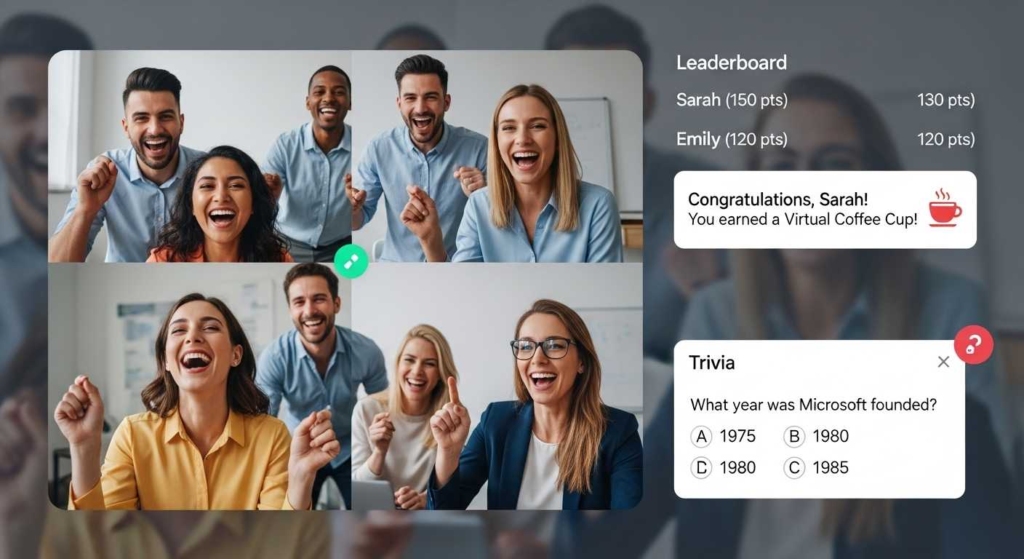
All this adds up: over time, teams with a dash of game-play in their meetings often report better mood, more ideas shared, and a friendlier online culture. One firm found that adding gamified elements to a training program led to measurable business gains (higher sales and new opportunities). While we don’t recommend making a points contest out of every call, using them occasionally can make your virtual workspace feel more engaging and human.
Challenges and Best Practices
Of course, gamification isn’t magic – it must be done wisely. Some things to watch out for:
Design Matters: Poorly designed game mechanics can backfire. For example, if a game is too competitive or cuts people out, it might discourage collaboration. SHRM warns that overemphasizing points or leaderboards can increase stress or even reduce job satisfaction. Always aim for teamwork, such as earning a point together when the team solves a puzzle.
Focus on Fun, Not Just Points: Keep the spirit light. If employees feel they have to play to please the boss, it becomes work instead of play. Jim Link from SHRM says gamification “for the sake of achievement alone risks disengagement, frustration, and even resistance”. Emphasize enjoyment and learning over winning.
Keep it Short: Don’t let games hijack your agenda. A few minutes is usually enough. Competitors’ experiences suggest 5–10 minutes per game is often perfect – just enough to refresh attention without dragging the meeting.
Know Your Audience: Tailor games to your culture. An icebreaker might work great for a young tech startup but feel awkward in a high-stakes sales briefing. Survey your team or try a pilot game to see their response.
Technical Prep: Make sure the app works before your big meeting. Test the audio/polls in a dry run so you’re not fumbling with software during the meeting.
Inclusivity: Not everyone loves games. Offer ways to pass or watch quietly so no one feels left out. You might give bonus points to creative wrong answers as much as correct ones, keeping the vibe supportive.
Privacy and Security: Use trusted apps. Stick to well-known extensions (like official Teams or Zoom apps). Never import an unvetted script or mod that could risk your meeting’s data or attendees’ privacy.
When used thoughtfully, these mods become a fun meeting tool rather than a disruption. Always debrief after a session – ask: Did people enjoy it? Did they learn something? That feedback will help you balance games with real goals.
Conclusion
Lync Conf Game Mods represent a fresh twist in the world of virtual collaboration. By sprinkling a bit of play into your meetings, you can break through the monotony of screen fatigue and make team interactions more lively and effective. As evidence shows, teams who embrace short, game-like activities see higher engagement and productivity.
The key is to use them as a tool — not to replace serious work, but to enhance it. Start with one small icebreaker or quiz in an upcoming call and watch how it changes the energy. Microsoft CEO Nicole Herskowitz put it well: in hybrid work, “sometimes we need a brain teaser or some friendly competition” to build trust and community. mods lync conf are just that kind of playful “brain teaser” for the modern workplace. With the right design and a light touch, they can make your team’s virtual meetings more engaging, memorable, and even a little fun.
By embracing these gamified meeting enhancements, your team can turn ordinary calls into collaborative experiences. After all, when work feels a bit more like play, everyone wins.