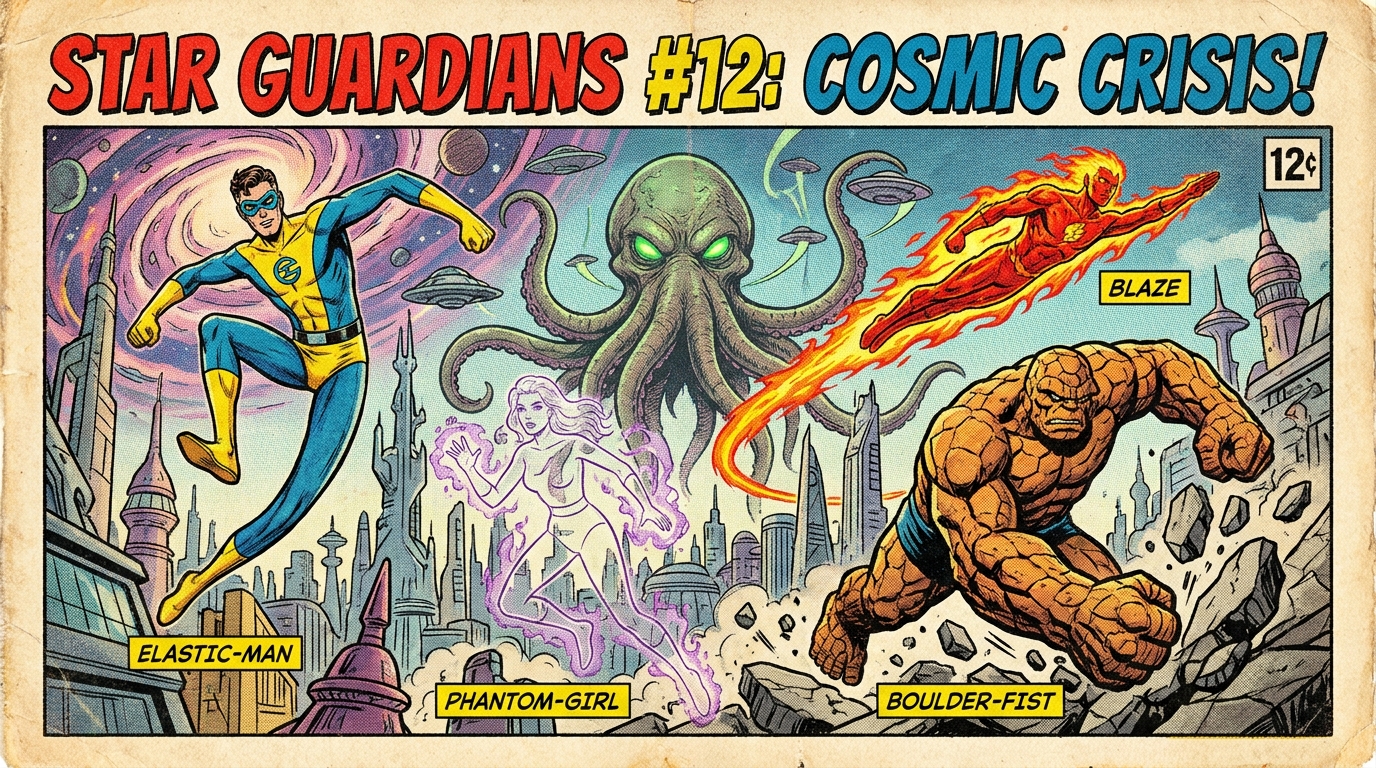
Fantastic Four comic book covers always tell the story before you even open the first page. Since the very first issue came out in November 1961, this cover art showed big cosmic wars, quiet family moments, and everything else. These are not just for advertisements. They show exactly how superhero art changed over sixty years, because the best artists in the business drew them.
Jack Kirby Made a Rule That People Still Follow
When Stan Lee and Jack Kirby started the comic, Kirby’s art gave a style that everyone followed later. He had a special power to show big things, and readers never saw anything like it before. For example, on issue #72, he put Silver Surfer against a background of red and black to show the empty space. It was very simple but it took your breath away. On issue #4, he drew the team before he started drawing those super big muscles that he became famous for later. That early art has a very clean feeling that people still love today.
Kirby also knew how to use the cover to make people curious about the story. Issue #52 had the first appearance of Black Panther, and just looking at the cover, you knew something big was happening inside. Issue #200 showed a giant fight between Reed Richards and Doctor Doom. The company chose Kirby on purpose to draw this because they wanted the art to be as great as the story milestone.
How Silver Age Covers Made the Marvel World Bigger
The Silver Age covers of Fantastic Four are very interesting because they work like a map for the growing Marvel Universe. Putting guest stars on the cover became a regular thing. Issue #39 showed Daredevil with the team, while Doctor Doom was looking scary over them. Issue #73 promised that Daredevil, Spider-Man, and Thor would all be on one cover. When you look at these pictures now, you see how they were connecting the whole universe together, cover by cover.
Sometimes, Kirby mixed real photos and textured things into his art to make the space scenes look more real. This was a very experimental way of working. It showed how excited people were back then, when rules for superhero comics did not exist yet.
New Artists with New Ideas
When the years passed, new generations of artists brought different feelings to the Fantastic Four covers. Gabriele Dell’Otto painted a cover for issue #56. It showed The Thing standing in the middle of destruction, and it looked like fine art from a museum, not a normal comic book. In the early 2000s, Mike Wieringo worked with writer Mark Waid. He brought a very warm and happy style to the covers, which matched the emotions of the stories.
Lately, the comic uses many different art styles because of the variant cover program. For the 2025 relaunch, Marvel brought together a great group of artists. This included Alex Ross, who makes paintings that look like real photos and feel very heavy, plus Alan Davis, Jerome Opena, Cliff Chiang, and Jeehyung Lee. John Buscema, who was a major artist in the Bronze Age, was remembered with a Remastered Hidden Gem Variant Cover. This brought his old, classic art to new readers today.
What Variant Covers Show About Modern Readers
The tradition of variant covers shows how Marvel thinks about its buyers now. For the 2025 issue #1, they made covers for every type of person. They made some for collectors, some for people who like old styles (like Leo Romero’s Retrovision Cover), some for gamers with Marvel Rivals art by NetEase Games, and some for kids with Lorenzo Pastrovicchio’s Disney variant showing Mickey Mouse. Skottie Young also started a five-part cover that connects together. If you buy all the issues in a row, you can put them side-by-side to see one big picture.
This variety shows that Marvel really understands how fans use covers now. For some people, the cover is just a piece of collection. For others, it is how they start the story. The best variant programs do both things at the same time.
Homage Covers: The Art of Saying Thank You
A very nice tradition in recent years is the homage cover series. Here, modern artists copy famous old Marvel covers, but they change the characters to the Fantastic Four. For example, Invisible Woman is placed inside the cover of Wolverine #1, and Mister Fantastic takes the place of Spider-Man on the cover of Amazing Spider-Man #300. These covers are good for many reasons. They celebrate Marvel’s history, they let old readers test their memory, and they show new fans the classic images that started everything.
The Disney “What If” homage covers took this idea even further. They imagined Mickey Mouse, Donald Duck, and other characters living in the Fantastic Four world. They remade famous Silver Age covers, like the first time Impossible Man appeared, and the big fights against Galactus.
Connecting the Comic Book to the Movie Screen
When the movie The Fantastic Four: First Steps came out in 2025, the cover art became even more important as a bridge between books and movies. The movie had something that critics called the most correct recreation of a comic book cover ever seen in a Marvel film. The four heroes stood in almost the exact same positions as the original 1961 comic book. That choice showed the same respect for cover art that makes the comics live forever. When a cover image is done with enough respect and good art, it becomes bigger than just a comic book.
Why These Covers Stay Important
Fantastic Four covers are much more than just advertisements. They are the front door to sixty years of stories about family, being curious, giving up things for others, and loving discovery. From Kirby’s crazy space art in the 1960s to the big mix of artists doing variants today, every cover is an important choice. Collectors want them, artists copy them, and new readers get their very first feeling about Marvel’s First Family before they even read one word. That is the long power of a great cover, and the Fantastic Four had a lot of them.