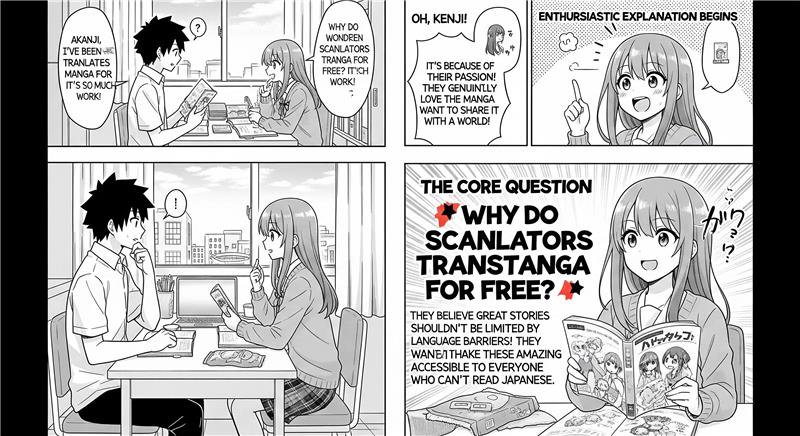
Scanlators – fans who scan, translate, and edit manga – usually do their work out of passion, not for money. In other words, they’re true fans who want to share stories they love with others. Most scanlation groups are entirely volunteer-run. For example, one fan group explains that it operates on “volunteer labor” with “no profit” – in their words, “No profit is made; all work is voluntary”. In short, scanlators treat translation as a hobby or a fan service. They do it because they enjoy the manga and want others to enjoy it too, rather than as a paid job.
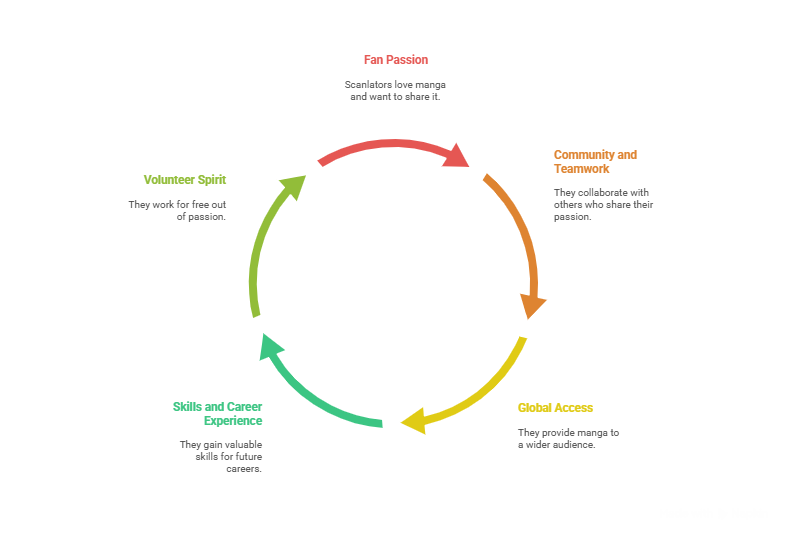
Here are the main motivations behind scanlators’ free work:
Fan Passion: They simply love the manga. Fans “usually scanlate to share their favorite comic with other fans who cannot read it in its original language”. Many scanlators say they started translating to bring their favorite series to new readers. One fan put it bluntly: they joined a scanlation team “to promote manga that [they] were interested in and… that no one else would translate”. In short, the story itself is the reward, not money.
Community and Teamwork: Scanlation is often a group effort. Volunteers split jobs (translating, cleaning pages, editing, typesetting, proof‐reading) and enjoy working together. Teams use forums, Discord chats, or social media to coordinate. Many fans find it fun to contribute and chat with others who share the same favorite series. This community spirit motivates scanlators to keep going.
Global Access: Official manga releases can be slow or limited. Publishers might translate popular titles only into a few languages, and lesser-known series may never get an official foreign edition. Scanlators fill that gap. By translating chapters themselves, they give readers worldwide instant access. For example, scanlators arose in part because official translations often lagged “weeks to years” behind the Japanese releases. One source notes that because many titles “do not get licensed,” scanlations let a “much wider audience” read them. In other words, scanlators make manga available to people who would otherwise have no way to read it.
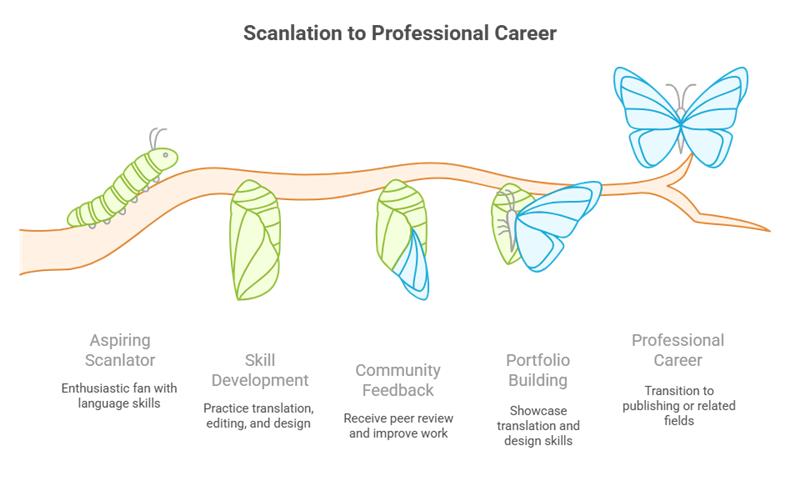
Skills and Career Experience: Many scanlators gain valuable experience. Working on translations hones language and design skills (like using editing software and learning cultural nuances). Some even use scanlation as a stepping-stone to a career. For instance, fan communities often act as “an informal training ground” for translators. Scanlation teams say they “cultivate future professionals – many scanlators later work in publishing”. In practice, volunteers build a portfolio that can help them land jobs in manga publishing or translation later on.
Volunteer Spirit (No Pay): Finally, there is simply no money in it. Scanlators never charge readers, and they don’t get paid by anyone else. They literally do the work for free. As one group put it: all scanlations are “non-commercial” and done by fans with “no profit” Teams often make their chapters available free online with no ads or fees. In many groups, members are there purely by choice – they enjoy the work itself or helping other fans.
Passion for Manga and Fandom
Scanlators volunteer their time because they are passionate fans, not paid workers. They translate manga to share beloved stories with readers who can’t access the original language. This work is fueled by enjoyment and a sense of community, not profit. Some join scanlation groups specifically to promote series that might never be translated otherwise.
By doing so, they spread awareness and help build interest in those titles. Ultimately, scanlation is seen as a way of giving back—celebrating the story, connecting with other fans, and ensuring more people can enjoy the manga they love.
Community and Collaboration
Scanlation projects rely on teamwork, with volunteers filling roles such as translators, editors, cleaners, typesetters, and proofreaders. Each step ensures the final product is polished and readable. Since the process is time-consuming, scanlators often work in online groups using platforms like Discord, Reddit, or forums to coordinate. These groups recruit fans with language or design skills, giving them a chance to contribute and belong to a community.
Collaboration makes the work enjoyable, as members share tasks, choose projects together, and celebrate releases. The social bonds and shared passion keep volunteers motivated, even without financial rewards.
Filling the Gaps: Global Access and Speed
A big motivation for scanlators is that official translations often fall short. Manga publishers cannot translate every title into every language or release them in all countries. As a result, countless manga would never reach an international audience without fan help. Scanlators step in to fill that gap. For example, many fans turn to scanlations because waiting for a legal translation would take too long – official English releases can be months (or even years) behind the Japanese schedule. Others work on indie or niche series that publishers simply ignore.
One study notes that because so many manga “do not get licensed,” scanlation groups give “a much wider audience access to the content”. In effect, scanlators democratize access: a reader in a country with no official release can still follow the story.
Skills, Experience, and Learning
For many scanlators, the effort is also a form of self-improvement. Working on translations requires practice in language, cultural interpretation, editing, and graphic design. Volunteers often learn to use software (like Photoshop or Clip Studio) to clean and typeset pages. This experience can be valuable on a resume. In fact, scanlation communities are known as training grounds for aspiring translators and editors.
So for those learning a language, scanlating provides real practice. They get to try out translations, receive feedback from peers, and see their work published (albeit unofficially). This educational aspect is a side benefit that keeps some volunteers motivated.
Volunteer Spirit and Non-Commercial Nature
Almost always, scanlation is done on a volunteer basis. Scanlators typically make it very clear that their releases are free and non-commercial. The Olympus Scanlation group, for example, lists “non-commercial” as a core principle: “No profit is made; all work is voluntary”. Other groups similarly emphasize that they never charge readers or run paywalls.
In fact, many scanlators explicitly avoid any ads or fees. One fan site notes that they “make their content available for free” with no intrusive ads or paywalls. The idea is to provide a service to the community, not to earn money. Since these projects use copyrighted material, accepting payment would also invite legal trouble.
Legal and Ethical Considerations
Scanlation is illegal in most countries because it involves reproducing and translating copyrighted manga without permission. Under international copyright law, such as the Berne Convention, these works are considered unauthorized. Publishers often treat scanlations as piracy, and governments like Japan’s have prosecuted people for uploading manga illegally.
Even so, scanlators usually see themselves as fans, not criminals. They often work on series that lack official translations, buying the original Japanese volumes before sharing their work. Many groups stop once a series is licensed in their language. Groups like Olympus Scanlation even encourage readers to support creators by purchasing official editions, showing their intent to complement, not replace, the market.
For many, scanlation is also about community. Volunteers collaborate to make stories accessible to a wider audience and to promote lesser-known titles. Studies suggest scanlations can actually expand readership, helping official publishers by creating demand for books and merchandise.
FAQs
Q: Are scanlations illegal?
Q: Do scanlators ever make money?
Q: Do scanlations help or hurt the official manga market?
Q: Can working on scanlations help me get a translation job?
Q: Why don’t scanlators just wait for official translations?